

TMJ Phase 2 Treatment: Options for Lasting Relief

Beyond Pain Relief: Exploring TMJ Phase 2 Treatment Options for Long-Term Stability
TMJ disorder (Temporomandibular Joint Disorder) can cause significant discomfort, including jaw pain, headaches, and difficulty chewing. Many patients undergo Phase 1 TMJ therapy with physiologic orthotics to alleviate pain and stabilize the jaw. However, the question often arises after the initial treatment: Do I need to proceed with Phase 2 treatment?
While Phase 2 treatment is not mandatory, it offers long-term benefits, including excellent stability and relief without reliance on an orthotic device. This article will explore the options available in Phase 2 treatment and why addressing the root cause of TMJ is essential for lasting relief.

What is TMJ Phase 1?
Phase 1 TMJ treatment focuses on short-term pain relief and jaw stabilization. Patients typically wear a custom-made orthotic device, which helps reposition the jaw and reduce pain by alleviating pressure on the temporomandibular joint. Orthotic therapy also acts as a diagnostic tool, allowing dentists to understand the patient's specific bite issues and determine the best course for long-term correction.
Why Consider Phase 2 Treatment?
After Phase 1 therapy, many patients are tempted to remain in the orthotic indefinitely. While this is an option, there may be a permanent solution. A broken bite — one of the leading causes of TMJ disorder — should ideally be addressed to prevent future issues. Phase 2 treatment allows correcting this broken bite for lasting stability, reducing the need for ongoing orthotic use.
Phase 2 Treatment Options
Continued Orthotic Use
Some patients opt to remain in the orthotic device, mainly if they are comfortable with the results and prefer a non-invasive option. This can be a viable long-term solution, though it requires continued reliance on the device and replacement typically every year or two.
Physiologic Orthodontics
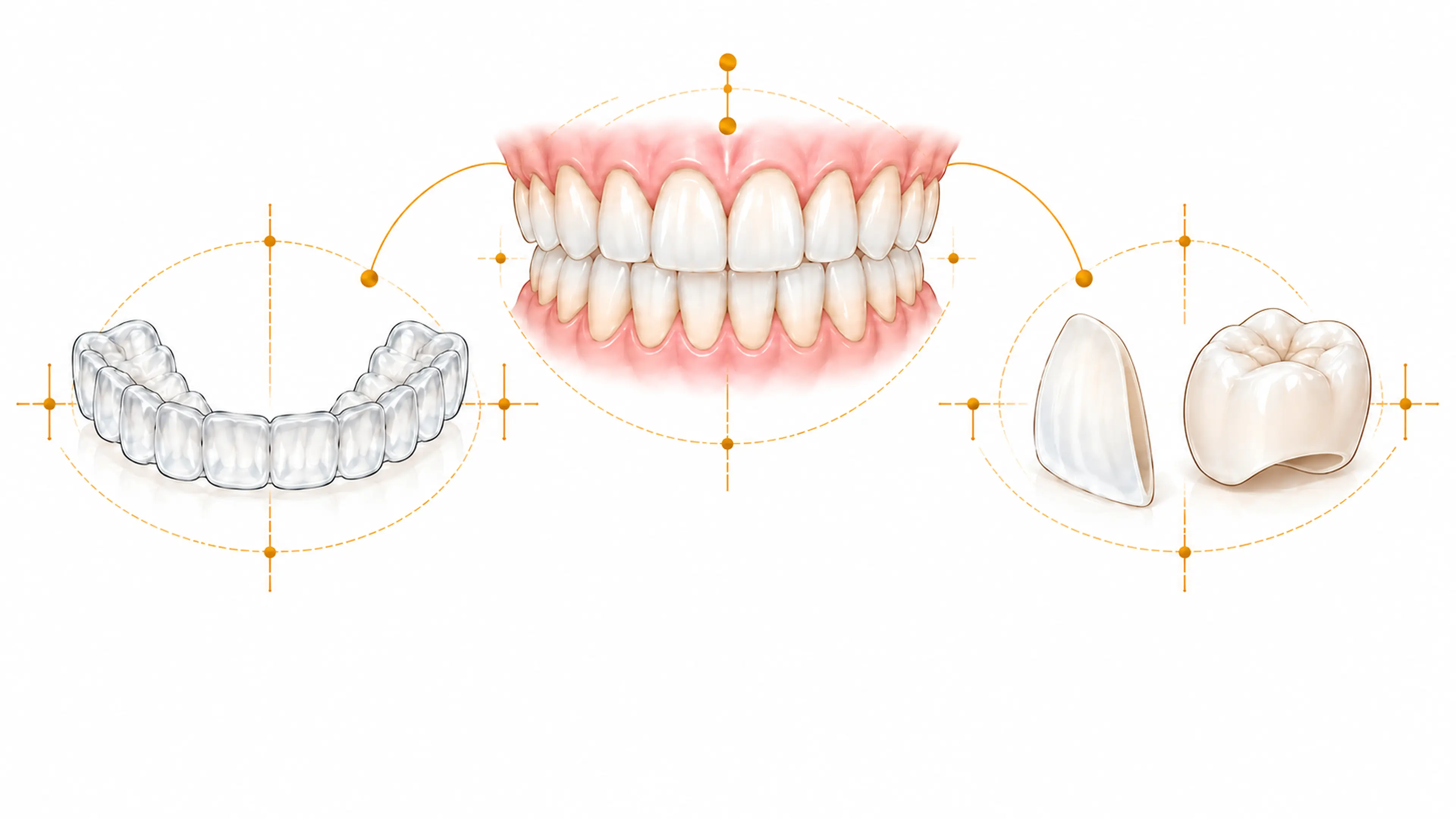
One of the most effective Phase 2 options is physiologic orthodontics, which involves moving the teeth to achieve the same stable bite found during Phase 1. Patients can achieve a more permanent solution to their TMJ issues by aligning the teeth with the newly stabilized jaw position without needing an orthotic device. This phase can be achieved for most patients with Invisalign alongside simultaneous bite management in the hands of Dr. Green. See Dr. Green's team for more details.
Porcelain Veneers, Crowns and Onlays
Porcelain veneers or onlays can be a great option for patients with worn-down teeth or cosmetic concerns. These procedures not only improve the appearance of the teeth but also help stabilize the bite. By restoring the teeth's structure, veneers and onlays provide a long-term solution to TMJ-related bite issues.
Combination Therapy and Treatment
In some cases, the best approach may be a combination of physiologic orthodontics and porcelain onlays or veneers. This combination offers both functional and cosmetic benefits, ensuring the teeth are properly aligned and enhancing their appearance.
Benefits of Addressing a Broken Bite
Correcting a broken bite in Phase 2 offers significant advantages:
- Long-term Pain Relief: Proper bite alignment reduces strain on the temporomandibular joint, minimizing the likelihood of recurring pain.
- Increased Stability: With the bite corrected, patients can enjoy more stability in their jaw function without the need for ongoing orthotic use.
- Improved Oral Health: A stable, aligned bite prevents excessive wear on the teeth and can improve overall dental health.
Ask the Dentist
- What are the benefits of choosing physiologic orthodontics for Phase 2 TMJ treatment?
- What are the risks of choosing jaw surgery over conservative physiologic-based treatment?
- How does an orthotic device help diagnose a broken bite during Phase 1?
- When should porcelain veneers be considered for TMJ stabilization?
TMJ Phase 2 Treatment: Achieving Long-Term Relief and Jaw Stability
While Phase 2 treatment is not required after completing Phase 1 TMJ therapy, it provides long-term benefits by addressing the root cause of TMJ dysfunction: a broken bite. Whether through continued orthotic use, physiologic orthodontics, or porcelain veneers and onlays, Phase 2 offers a range of options to achieve lasting stability and pain relief.
Consult with your local Springfield TMJ specialist, Dr. Randi Green, to determine the best course of action for your situation and consider the benefits of correcting your bite permanently for optimal long-term health.