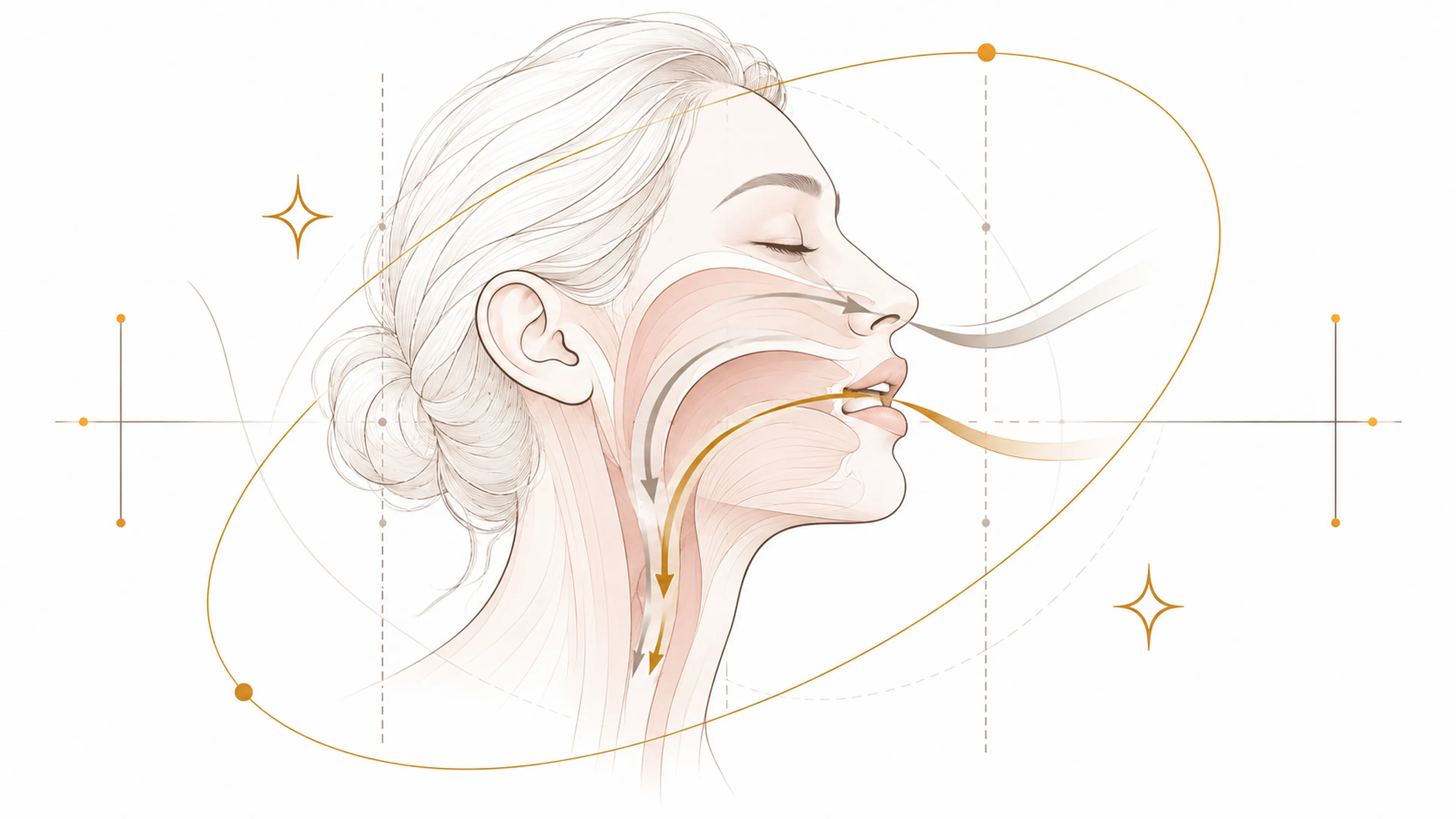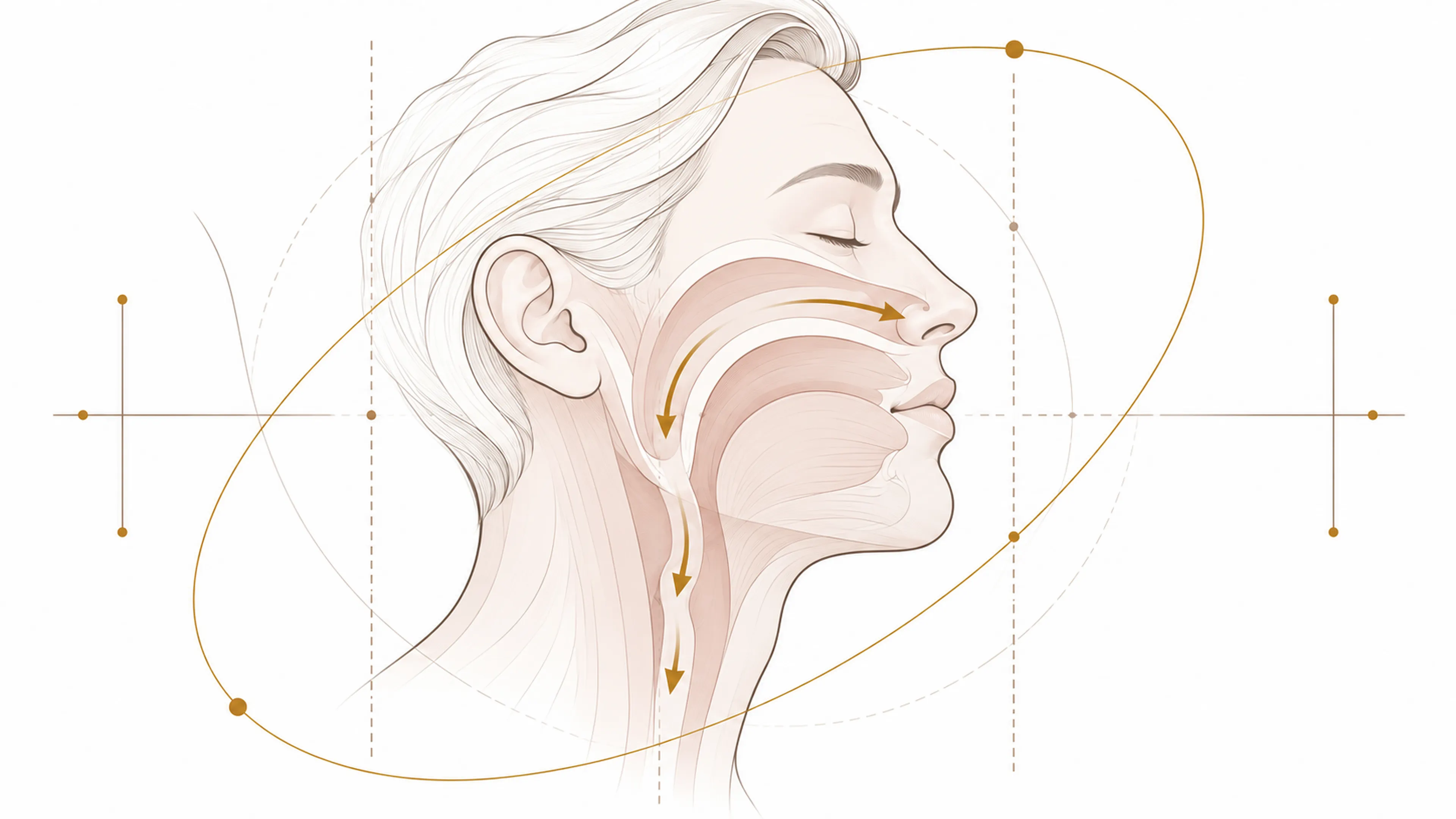


Myofunctional Therapy in Springfield, MO
Retraining the tongue, lips, and facial muscles that shape how you breathe, swallow, and sleep. Physical therapy for the foundation of your airway.
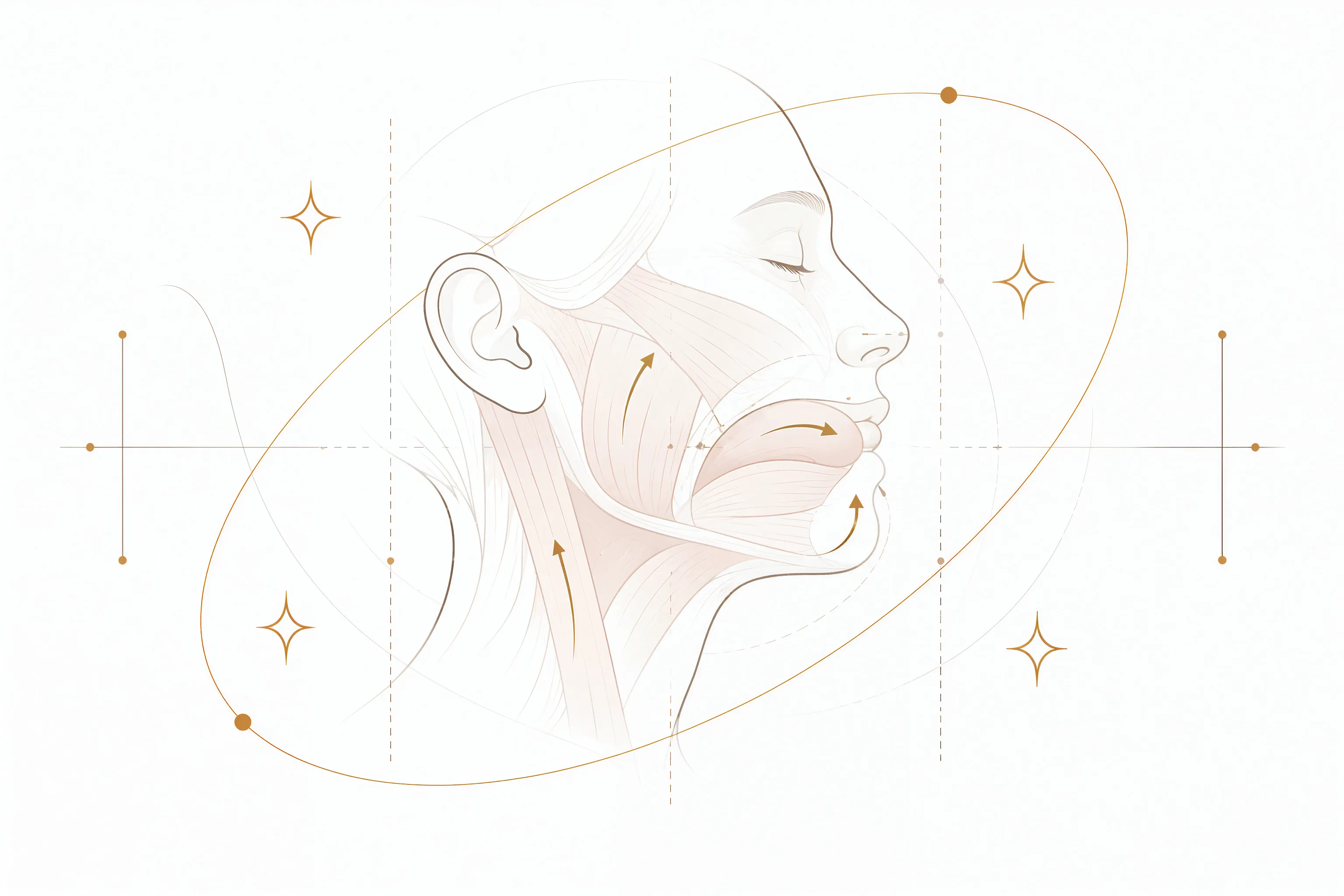
Exercise, Not Appliances
Myofunctional therapy is guided muscle retraining: simple daily exercises that change how your tongue, lips, and face function.
The Airway Connection
Proper tongue posture and nasal breathing support an open airway around the clock, not just during treatment.
Whole-System Fit
Therapy integrates with sleep apnea care, TMJ treatment, and physiologic orthodontics, because the same muscles drive all three.
Breathe Institute Aligned
Dr. Green is a Breathe Institute Ambassador, Las Vegas Institute Fellow, past IAPA president and connected to the leading centers for airway-focused, myofunctional care.

What is Myofunctional Therapy?
Think of it as physical therapy for your mouth and face. Myofunctional therapy uses guided exercises to retrain the resting posture and function of your tongue, lips, and orofacial muscles, teaching your tongue to rest against the palate, your lips to seal comfortably, and your breathing to route through your nose. Those patterns sound small; they shape your airway, your bite, your facial development, and your sleep.
- Guided exercises retraining tongue posture, lip seal, and swallowing
- Restores nasal breathing as your default, day and night
- Supports airway health, bite stability, and facial muscle balance
- No appliances required: the change is in the muscles themselves

Could Muscle Habits Be Working Against You?
Most people have never had anyone look at how their tongue rests or how they swallow, yet these patterns run thousands of repetitions a day, for or against you.
- Mouth breathing, day or night, in adults or children
- A tongue that rests low or pushes against the teeth when swallowing
- Snoring, restless sleep, or diagnosed sleep-disordered breathing
- Teeth that shifted back after braces or aligners
- TMJ symptoms, clenching, or facial muscle tension
- A restricted tongue (tongue-tie) limiting normal function
How Does Myofunctional Therapy Work at Smile Doctor?
It starts with the same whole-system evaluation behind everything here: your airway, tongue function and range, breathing patterns, and how your muscles behave at rest and in motion, including screening for tongue-tie and other restrictions that limit normal function. From there, Dr. Green and Meghan builds a personalized exercise program, simple, structured routines practiced daily and progressed at guided check-ins, retraining your patterns over a course of months. Where therapy pairs with sleep appliance treatment, TMJ care, or physiologic orthodontics, the programs are coordinated so the muscles and the mechanics improve together.
- Whole-system evaluation of tongue, airway, and muscle function
- Screening for tongue-tie and functional restrictions
- Personalized exercise program with guided progression
- Coordinated with your sleep, TMJ, or orthodontic treatment plan
What Does Myofunctional Therapy Cost?
Your program investment depends on its length and whether it stands alone or supports a broader treatment plan, and it's quoted in writing before you begin. FSA and HSA benefits often apply to therapy, and when myofunctional work is part of your sleep or TMJ treatment, it's planned and priced within that complete written plan.
- Program quoted in writing before you begin
- FSA and HSA benefits often apply
- Coordinated pricing when part of sleep or TMJ treatment
- Flexible monthly payment plans with approved credit
Where your tongue rests, how you swallow, and whether you breathe through your nose shape your airway, your bite, and your sleep more than most people ever learn. Myofunctional therapy retrains those muscle patterns with simple, guided exercises, supporting everything from sleep apnea treatment to TMJ relief and lasting orthodontic results.
The Missing Piece
Appliances and orthodontics move structures; myofunctional therapy retrains the muscles that pressure them. Lasting results usually need both.
Airway First, Always
Tongue posture and nasal breathing support your airway 24 hours a day, which is why therapy pairs so naturally with sleep treatment.
Why Results Stick
Teeth drift back when muscle patterns never changed. Retrained function is what makes orthodontic and TMJ results stable.
Tongue-Tie, Screened Honestly
Restricted tongues limit what exercises can achieve. Screening comes first, and you'll hear honestly if a restriction needs addressing.
Breathe Institute Ambassador
Dr. Green's connection to the Breathe Institute reflects the same airway-centered philosophy behind every treatment at Smile Doctor.


Jayne
,
Patient Review

Courtney
,
Patient Review

Brooklyn
,
Patient Review

Pat
,
Patient Review

Questions patients often ask about myofunctional therapy
It retrains dysfunctional muscle patterns, low tongue posture, mouth breathing, incorrect swallowing, that contribute to sleep-disordered breathing, TMJ strain, orthodontic relapse, and airway problems. It treats the habits underneath the symptoms.
As a support to treatment, yes: retraining tongue posture and nasal breathing helps maintain an open airway and strengthens the results of appliance therapy. It complements sleep treatment rather than replacing diagnosis and appliance care.
No. Children benefit enormously because their facial growth is still shaping, but adults retrain muscle patterns successfully at any age, especially alongside sleep, TMJ, or orthodontic treatment.
A tongue-tie is a restriction that limits the tongue's normal range and function, and it matters at any age: a tethered tongue can't rest on the palate or support the airway properly. Screening is part of every myofunctional evaluation here.
Programs typically run several months of short daily exercises with guided check-ins, and your projected timeline is mapped before you begin. Like any physical therapy, consistency is what changes the pattern.
Often it's the difference between results that hold and results that fade. Appliances and aligners change structures; therapy changes the muscle forces acting on them, and the two together are why physiologic treatment lasts.
Your program is quoted in writing before you begin, FSA and HSA benefits often apply, and when therapy supports a sleep or TMJ plan, it's priced within that complete written plan.